



Wildlife and dark skies friendly lighting
Start with darkness. Add light only where it earns its place.
The best lighting scheme for wildlife is no artificial lighting at all. The second best uses the absolute minimum.
Think about the whole landscape: the routes you use, the neighboring properties, the habitat and the sky above it.
Plan a lighter footprintCoastal property? Turtle lighting advice for homeowners and designers
Keep the light where it belongs
Question every light
Start with a necessary task. Leave the rest unlit.
Aim and shield
Direct light downward to its task. Keep it out of the sky, habitats and neighboring windows.
Use less
Choose the lowest useful output. Check glare and reflected light after dark.
Give darkness back
Use timers, dimming or motion controls, and switch off when lighting is no longer needed.
These choices reflect the DarkSky / IES principles for responsible outdoor lighting, including warmer light where appropriate.
Kelvin is color, not brightness
Kelvin (K) describes the color appearance of white light. Lower values look warmer and more golden. It does not measure brightness, and two LEDs with the same Kelvin rating can have different spectra.
Our US collection offers 2700K warm white and monochromatic amber options. Monochromatic amber is a different spectrum, not simply a lower Kelvin number. Select the light source for the site, alongside its output, shielding and operating hours.
Wildlife needs connected darkness
Lighting can affect feeding, movement and behavior. Keep dark connections between habitats rather than illuminating every tree, boundary or planted area.
No color temperature guarantees safety for every species. Where wildlife may be affected, involve a qualified local ecologist and check the requirements for your project location.
Read the Bat Conservation Trust’s explanation of lighting impacts.
Design for your US location
Local lighting requirements vary. Tell us your city and state, and share any ecological reports, permit conditions or community requirements with your design brief. We can help prepare a lighting proposal for review; the fixture alone does not establish that an installation meets local requirements.
COASTAL GARDENS / SEA TURTLES
Can the beach see your lights?
Light the places people need. Leave room for turtles.
Artificial light can draw hatchlings away from the ocean. For a home near a nesting beach, the view from the sand matters as much as the view from the patio. A careful scheme considers the light source, its brightness, its shielding and every place it can be seen.
Amber still needs a shield
Keep fixtures low, use only the output needed for the task, and hide the bulb, LED or glowing lens from beach views. Ask for the exact source spectrum: a warm-white 2700K label or an amber-colored filter does not establish suitability. Turtles can still see amber, so more fixtures and more brightness are not the answer.
Use FWC's low, long and shielded criteria together, alongside the requirements for the property.
For homeowners
A practical starting point for an existing garden, a new home or a lighting upgrade.
- Give each light a job.
Mark the steps, changes in level, paths and entrances you use after dark. Note when you use them. A dark planting bed does not need lighting simply because it is dark.
- Look at the whole property.
From permitted beach access, look back from several positions along the shore. Note exposed lamps, glowing lenses, light on the sand, reflections, pool lighting and bright windows. Keep clear of turtles, nests and dunes, and avoid adding light to the beach.
- Make useful changes.
Switch off unnecessary decorative lighting. Keep essential routes usable while arranging suitable shields, positions and sources. Close blinds or curtains and switch off unused indoor lights. Discuss timers and sensors without compromising necessary safety lighting.
- Ask before you buy.
Which source is inside this exact fixture? How will its glowing parts stay hidden from the beach? Who will check it after dark? Ask your city or county about the rules, dates and permit conditions for your address.
- Keep the improvement working.
Save fixture and replacement-source details. Give guests and maintenance teams simple instructions, and recheck after storms, replacements or changes to screening.
No garden plan yet? Start with your address, photographs and a sketch. Tell us what you need to see and what you would like to improve.
Help me plan my lighting →For designers
A workflow for new coastal installations, from the first plan to the after-dark review.
- Separate essential tasks from optional features.
Annotate routes, levels, entrances, hours of use and required visibility. Test the client's feature-lighting wishes against beach views; relocate, rethink or leave a feature unlit where necessary.
- Build the site and requirements picture.
Collect the address, scaled plans, elevations, photographs and landscape details. Confirm local lighting rules and project permit conditions. Use DEP's CCCL map as an initial location check, and confirm survey and permit requirements with the authority.
- Specify the complete arrangement.
Record the exact source and spectral data, output, matching photometry, optics, shielding, mounting height, aiming and controls. Record approved substitutions. An amber label alone is not a specification.
- Check spill and source visibility separately.
Use illuminance calculations to understand task light and spill. Also assess whether the emitting surface is visible from documented beach viewpoints, including alongshore views. Record assumptions and sample limitations. A low lux reading alone does not demonstrate concealment.
- Coordinate, inspect and hand over.
Issue the fixture schedule and installation details. Check the finished scheme after dark, including interior light, reflections and screening gaps. Correct and recheck problems, then hand over as-built information, replacement parts, controls and a maintenance responsibility.
Keep the evidence with the plan. Check certification dates, exact models, source options and conditions with the reviewing authority. A historical product listing is not proof of current certification or approval of an installation.
Discuss a coastal project →Check the requirements for your location
Start with FWC's practical sea turtle lighting advice, its local ordinance directory and current certification information. For coastal construction, consult Florida DEP's CCCL map guidance. Local lighting requirements can also apply landward of the line.
Adapted from Hudson's designer and coastal homeowner guides. Free remote lighting design, with no obligation to buy. Required permits, site attendance and the installed after-dark review are separate from the remote design service.
RHS Chelsea Flower Show 2026
Two British show gardens demonstrate different roles for carefully considered lighting. These are UK projects, presented as design references for your US landscape.
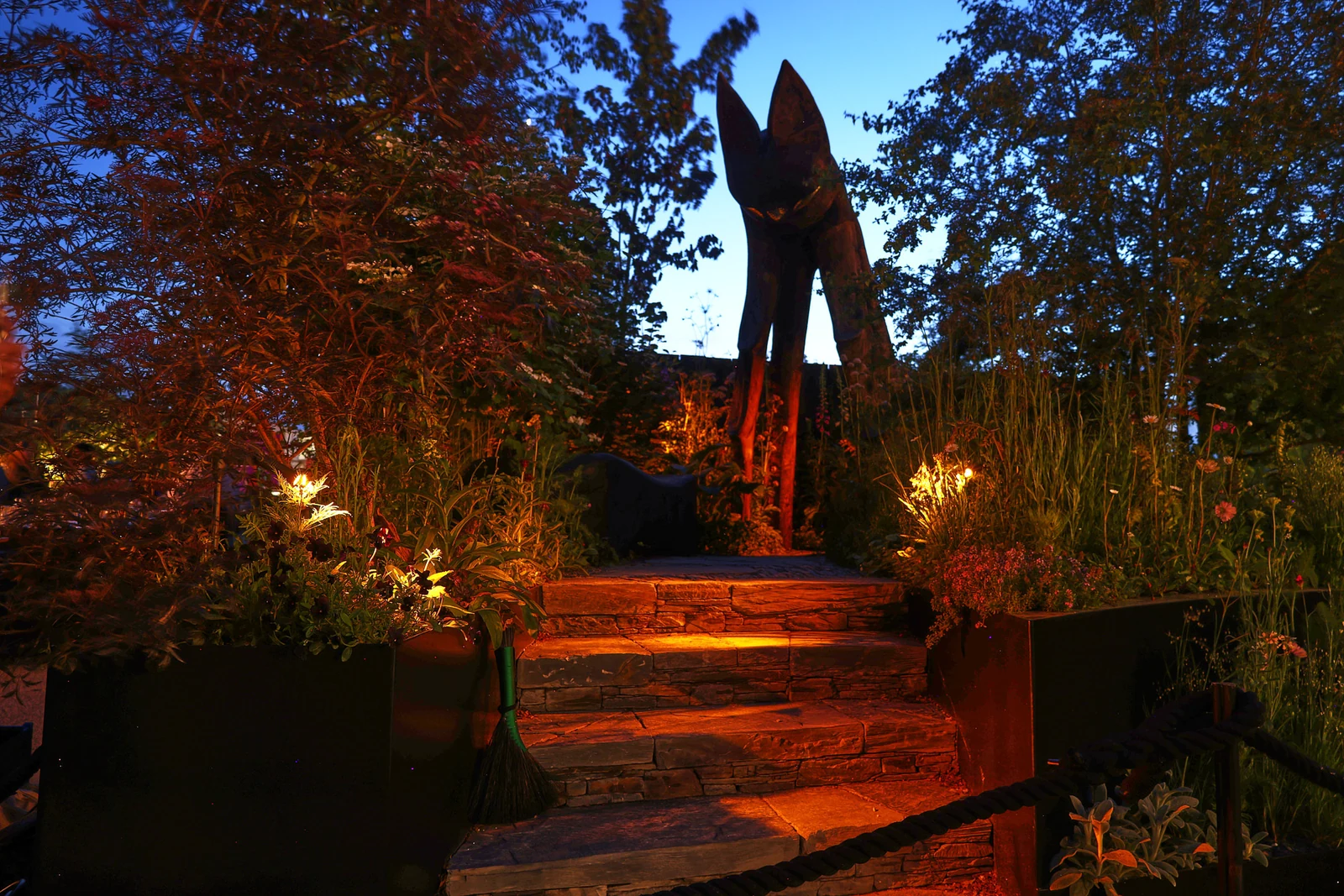
The Bat Conservation Trust’s Nocturnal Garden
Designed by Melanie Hick. Hudson designed and manufactured the lighting, using 1800K light directed downward, with no uplighting. The lesson: reveal the route while preserving darker layers around it.
Garden: Melanie Hick. Build: Phil Sutton Landscapes. Lighting design: Chris Hudson and Jodie Graham. Lighting manufacture: Hudson Lighting.
The 1800K scheme is a project example, not a claim that the same specification is suitable for every wildlife-sensitive site.
Explore the Nocturnal Garden on our UK site →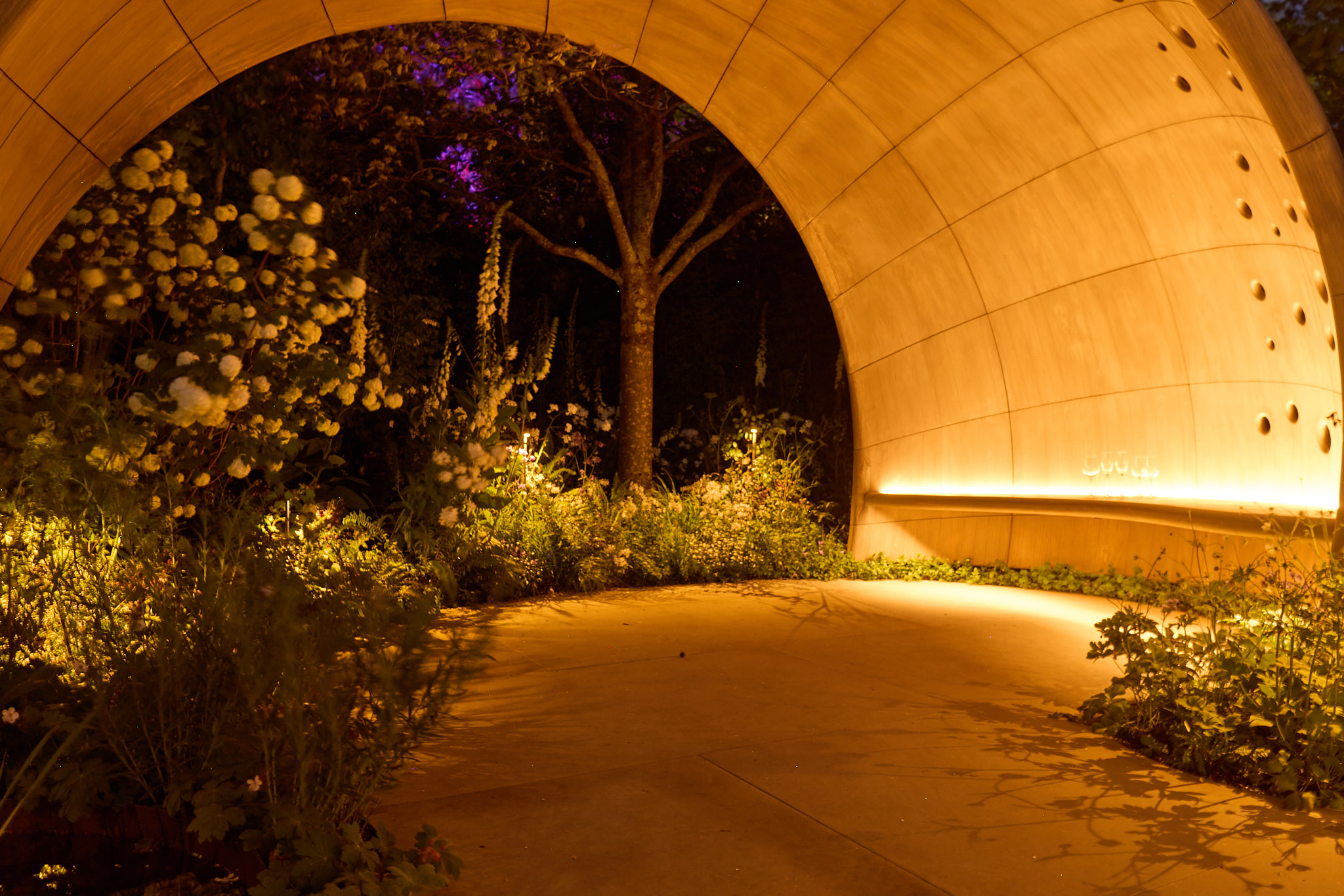
A Garden for Every Parkinson’s Journey
A Parkinson’s UK garden designed by Arit Anderson, with lighting designed by Eleni Shiarlis of ES Lighting Design. Hudson manufactured the fixtures.
This garden shows our manufacturing work within another designer’s lighting scheme. Its inclusion is not a wildlife or dark-sky certification claim.
Explore the Parkinson’s UK garden on our UK site →Start with a plan
Show us what needs lighting and what you want to keep dark. We’ll help you consider suitable fixtures from the US collection.
Request your lighting design“Wildlife and dark skies friendly” describes our design approach. It does not mean DarkSky International certification or endorsement. Suitability depends on the full installation and its setting.